What is androgenetic alopecia?
Androgenetic alopecia (AGA) is male pattern hair loss. Changes in the hair growth cycle can produce finer, shorter hairs and more visible thinning at the hairline and crown. Hair loss can have other causes, so we also check the pattern of loss and the condition of the scalp.
Hair growth cycle
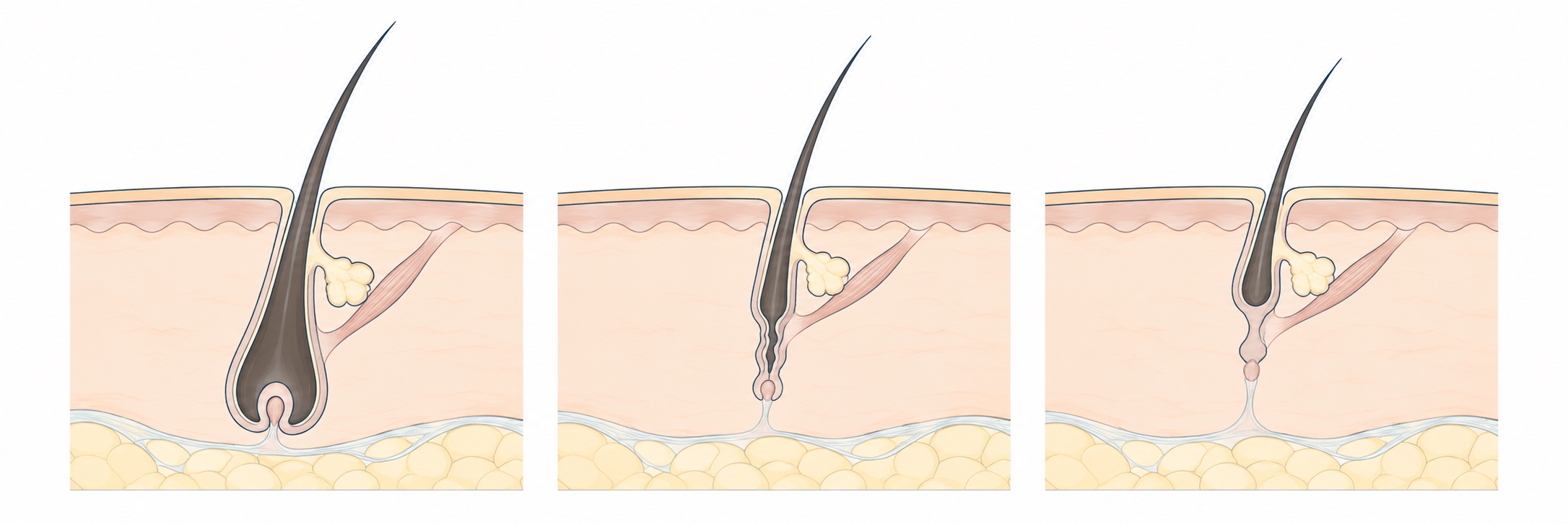
Growth phase
The hair grows
Transition phase
The lower part of the follicle shrinks
Resting phase
Hair production pauses
Hair goes through growth, transition and resting phases and then returns to the growth phase. This is a simplified diagram of the cycle. The duration and timing differ for each hair. The diagram does not show the causes of hair loss or the effects of treatment.
Reference Japanese Dermatological Association explanation of the hair growth cycle
Considering treatment options
We assess male androgenetic alopecia and discuss options such as oral or topical medicines based on your condition. Available medicines, expected changes and side effects differ. We consider your medical history and medications, whether you can continue the treatment and how to review your progress.
What to note before your consultation
Tell us when you noticed changes, whether hair loss runs in your family, and which hair products, medicines and supplements you use. Previous photos can help show changes.
What we check during the consultation
With androgenetic alopecia, the growth phase shortens and more hairs remain fine, making thinning more visible. If shedding increases suddenly, consider other forms of hair loss, illness or the effects of medicines.
When considering an approach, discuss the changes you hope for and what would make treatment difficult to continue. Tell the physician about products you use and treatments you have tried so you can discuss duplication, interactions and how to track progress.
| What concerns you | What to note |
|---|---|
| Changes at the hairline or crown | When you first noticed them and which areas changed |
| Sudden shedding | How quickly it changed and any illness or medication changes around that time |
| Over-the-counter products and treatment elsewhere | Product names, how you used them and any reactions that concerned you |
| Options to consider | Changes you hope for and questions about side effects, costs and visits |
Precautions and risks
Side effects and contraindications differ by medicine. Do not add or change prescription medicines on your own. Tell the physician the product names and how much you use.
This is an overview. Please consider a treatment or test after receiving an explanation specific to your care.
Fees and conditions
Current conditions are being confirmed
Current availability, products or equipment used, fees including tax, and usual duration and number of sessions are still being confirmed. This page alone does not enable you to apply for the service.
When the service details are confirmed, we will also explain any additional consultation or testing fees, main side effects and approval status.
What to check before your consultation
- How do oral and topical medicines differ?
- When will you review progress and what will you look for?
- What will ongoing care cost, including consultations and medicines?
Write down your questions and bring them with your medication record and previous test results.
How to ask about this serviceReference information
- Japanese Dermatological Association guidelines for male and female pattern hair loss
- Japanese Dermatological Association explanation of male pattern hair loss
- Japanese Dermatological Association information on causes of hair loss
The general explanation was added on 10 September 2026. The references do not establish which products the clinic uses or indicate approval of an individual service.